

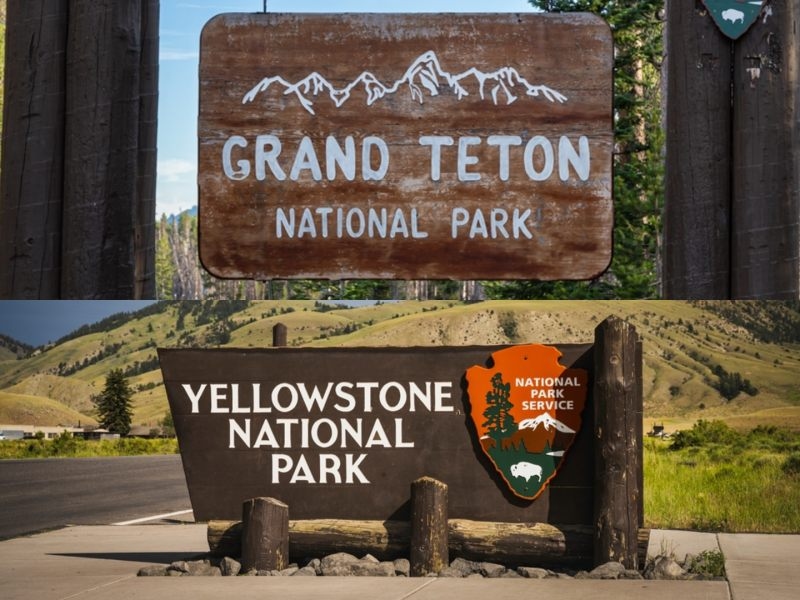
Choosing between Yellowstone vs. Grand Teton is one of the most exciting decisions for outdoor enthusiasts, road trippers, and families. According to official annual travel statistics from the National Park Service (NPS), Yellowstone National Park welcomed over 4.7 million visitors, while nearby Grand Teton National Park hosted more than 3.8 million travelers exploring the Rocky Mountains. Standing in front of roaring geysers or staring up at cathedral-like granite peaks creates lifelong memories that reconnect you with nature.
You do not have to stress over picking just one destination without understanding how they differ. Both national parks offer unique landscapes, distinct wildlife opportunities, and memorable hiking experiences located just thirty miles apart.
In this comprehensive guide, we will analyze key differences in geography, hiking, wildlife, family activities, and trip lengths. Read on to discover actionable advice for crafting your dream Western itinerary.
Understanding Yellowstone vs. Grand Teton National Park begins with recognizing their contrasting geological landscapes and overall size.
| Park | Size | Key Features |
| Yellowstone | 2.2 Million Acres | Geysers, Hot Springs, Canyons & Basins |
| Grand Teton | 310,000 Acres | Jagged Mountain Peaks, Alpine Lakes & Valleys |
Yellowstone sits atop an active supervolcano, housing over half of the world's hydrothermal features, including bubbling mud pots and colorful hot springs. In contrast, Grand Teton showcases steep mountain ranges rising dramatically eight thousand feet above the Jackson Hole valley floor without foothill obstructions.
Yellowstone spans a massive 2.2 million acres connected by a vast lower and upper loop road system. Grand Teton is far more compact at 310,000 acres, making it easier to explore in a shorter timeframe without spending hours inside a vehicle.
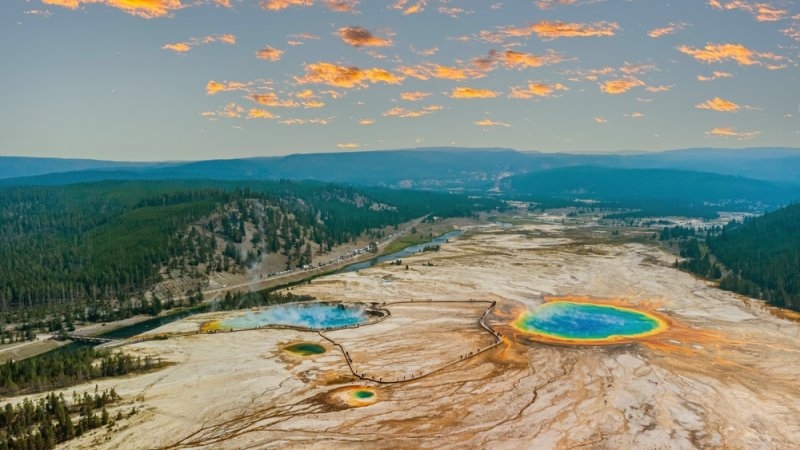
Must Try: Grand Prismatic Spring Beauty in Yellowstone, Wyoming
Deciding on Yellowstone or Grand Teton for scenic views depends on what type of natural beauty inspires your travel group most.
| Landscape Type | Primary Park Highlights & Landmarks |
| Hydrothermal | Old Faithful, Grand Prismatic Spring, and Mammoth Hot Springs |
| Mountain Vista | Grand Teton Peak, Jenny Lake, and Schwabacher Landing |
| River Canyons | Grand Canyon of the Yellowstone and Snake River Overlook |
| High Valleys | Lamar Valley, Hayden Valley, and Antelope Flats |
Comparing Yellowstone vs. Grand Teton scenery and animal viewing opportunities reveals why both parks attract nature lovers globally.
Yellowstone captivates visitors with the vivid rainbow rings of Grand Prismatic Spring and the rushing waterfalls of the Grand Canyon of the Yellowstone. The park's varied elevation offers diverse terrain ranging from lodgepole pine forests to open sagebrush plateaus.
Grand Teton offers classic mountain landscapes dominated by Teton Range reflection views across Jenny Lake, Jackson Lake, and String Lake. Sunrise photographers frequently gather at Oxbow Bend to capture golden light striking the towering jagged peaks.
Spotting native animals is a core highlight when exploring Yellowstone vs. Grand Teton wildlife habitats in Wyoming.
| Wildlife Hotspot | Wildlife |
| Lamar Valley | Bison & Wolves |
| Hayden Valley | Grizzly Bears |
| Moose-Wilson | Moose & Owls |
Reviewing Yellowstone vs. Grand Teton hiking options helps outdoor adventurers match trail difficulties with their physical fitness goals.
Yellowstone offers hundreds of miles of flat wooden boardwalks that wind safely through delicate geyser basins and hydrothermal areas. These accessible paths allow hikers of all abilities to observe thermal vents without strenuous climbing.
Grand Teton is a paradise for serious mountain hikers and climbers. Trails like Cascade Canyon and Delta Lake feature steep elevation gains, rugged granite pathways, and panoramic alpine valley overlooks.
Evaluating Yellowstone vs. Grand Teton for families ensures your vacation keeps children entertained while minimizing car fatigue.
Crafting a seamless Yellowstone vs. Grand Teton itinerary allows you to experience both legendary national parks in a single adventure.
| Day | Vacation Roadmap |
| Day 1 & 2 | Explore Yellowstone Geyser Basins, Old Faithful & Grand Canyon |
| Day 3 | Drive Wildlife Valleys & Travel South via Rockefeller Parkway |
| Day 4 & 5 | Hike Jenny Lake, Enjoy Teton Vistas & Tour Historic Jackson Hole |
Determining Yellowstone vs. Grand Teton: how many days to allocate depends on your overall travel budget and schedule constraints.
To explore both parks thoroughly without rushing, plan for a minimum of four to five full days. Allocate three days to cover Yellowstone's vast loop roads and two days to enjoy Grand Teton's mountain trails and lakes.
If you are short on time, taking a three-day road trip still allows you to see primary sights like Old Faithful, the Grand Canyon of the Yellowstone, and Jenny Lake.
Understanding how can you visit Yellowstone and Grand Teton together simplifies your regional travel planning. The two parks share a border connected directly by the scenic John D. Rockefeller Jr. Memorial Parkway.
Driving between Yellowstone's South Entrance and Grand Teton's North Entrance takes less than forty-five minutes under normal traffic conditions. This proximity makes combining both destinations into one itinerary effortless.
Choosing between these two legendary Western destinations does not require leaving one off your travel bucket list. Throughout this guide, we evaluated how Yellowstone's geothermal wonders and sprawling valleys contrast with Grand Teton's dramatic mountain peaks and alpine lakes. We explored key differences in wildlife watching, hiking difficulty, driving distances, and family activities. By understanding how closely connected these parks are along the Rockefeller Parkway, you can easily build a flexible vacation that captures the absolute best of both landscapes.
Planning an unforgettable Rocky Mountain adventure begins with seamless travel logistics and stress-free transit arrangements. Arriving relaxed allows you to spend more time enjoying scenic vistas, spotting wildlife, and exploring historic mountain trails with your loved ones. Plan your regional flight connections, gateway transit options, and travel details today at Airport Wyoming.
Jackson Hole Airport, located inside Grand Teton National Park, provides the closest air access for both parks. Alternative regional gateways include Bozeman Yellowstone International Airport in Montana, Yellowstone Airport in West Yellowstone, and Idaho Falls Regional Airport, depending on your primary drive route and flight budget.
Late September through early October offers pleasant daytime temperatures, beautiful fall foliage, active wildlife during annual mating seasons, and significantly smaller crowds than midsummer. Late May and early June also offer great conditions, though snow may linger on high-elevation mountain trails.
Yes, each national park charges an individual vehicle entrance fee valid for seven days. However, purchasing an America the Beautiful Interagency Pass grants unlimited admission to both parks and all federal recreational lands nationwide for a full year, making it cost-effective for road trippers.
Pets are strictly prohibited on all unpaved hiking trails, boardwalks, and thermal areas in both national parks to protect native wildlife and domestic animals. Pets are only permitted in paved areas, parking lots, established campgrounds, and within one hundred feet of roads while on a leash.
Always carry EPA-approved bear spray in an easily accessible holster and know how to operate it properly. Stay calm, make noise while hiking, yield space, and slowly back away without running or turning your back if you spot a grizzly or black bear along a trail.
This content was created by AI