

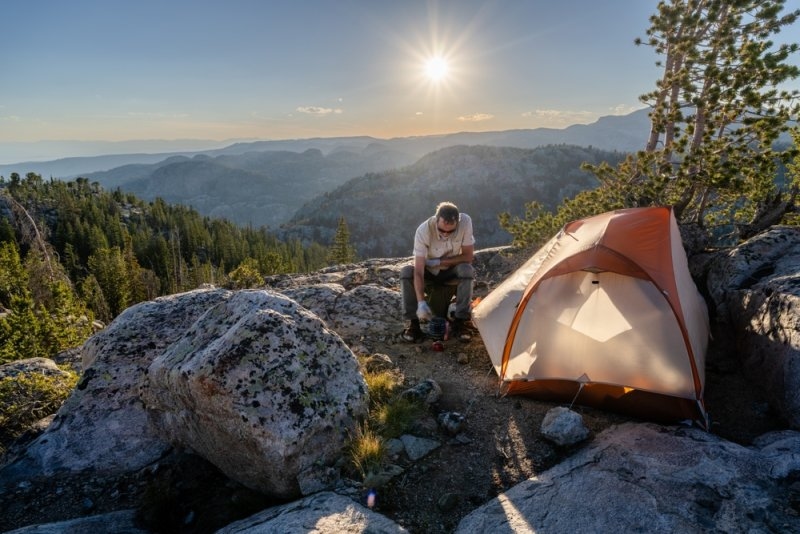
Wyoming has more open space than most people expect. Drive an hour, and you'll often see more antelope than cars, which is exactly why Wyoming camping appeals to so many travelers. Some people want a tent and a fire ring. Others want a cabin with a kitchen. The state handles both fine.
Below you'll find regions worth visiting, booking advice, and a few safety points that matter more than people think.
Mostly it's the room. Wyoming camping gives you distance from other people, and that's getting harder to find. A few campgrounds sit right by town with toilets, picnic tables, and a restaurant nearby. Others have nothing but trees and a lot of sky. Both have fans.
There's no single way to camp here. Some people want hookups for the RV, some want a bare tent pad by a lake, and a few want to sleep in a fire tower. The table sorts the main styles so you can see what fits.
| Camping Style | Best For | Example |
| Full-hookup RV parks | Comfort and longer stays | Cody KOA |
| Tent sites | Budget travel and nature lovers | Jenny Lake Campground |
| Cabins and yurts | Families and cold nights | Sinks Canyon yurts |
| Dispersed camping | Solitude and adventure | Killpecker Sand Dunes |
| Unique stays | Memorable getaways | Spruce Mountain Fire Lookout |
Glamping outfitters around Jackson Hole exist too, if you like your camping with softer sheets.
Late June through early September is the safest window for Wyoming camping. Lower sites sometimes open sooner. The high country is another story. Places like the Winds and Brooks Lake may not open fully until mid- or late summer, so check dates before you pack the car and drive six hours.
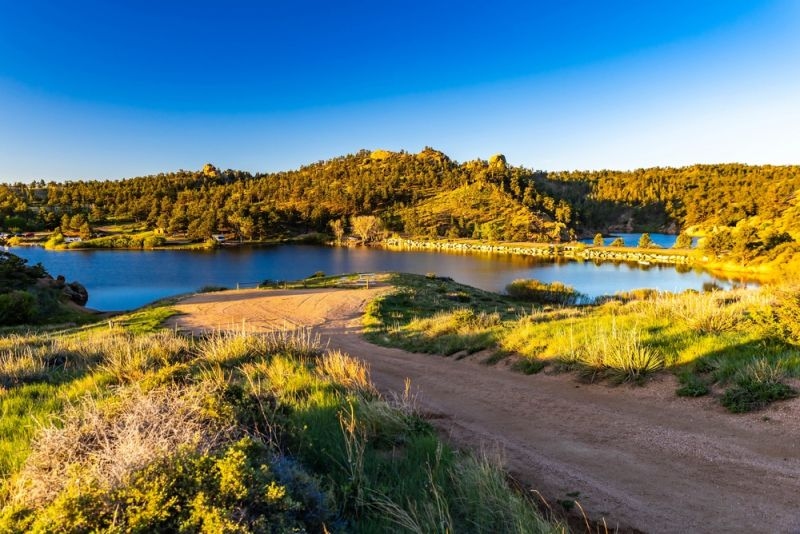
The best camping in Wyoming isn't in one place. It's spread over four regions, and they feel quite different from each other. Distances are long, too. Choose one or two regions for a trip rather than trying to cover the whole state in a week.
Jenny Lake Campground sits at the base of the Tetons. It's tent-only, it takes reservations, and it fills quickly, so don't leave it late. Hiking and water activities are right there, and the stargazing is excellent. Brooks Lake Campground is higher, at 9,200 feet, with 13 sites and trails into the Washakie Wilderness.
Sibley Lake Campground follows the Bighorn Scenic Byway and has 25 sites, 15 with electric hookups. It sits at 7,900 feet, so evenings get cold. Kayaking and fishing are close. Over at Devils Tower KOA, you'll find RV sites, tent spots, and cabins, plus nightly screenings of Close Encounters of the Third Kind, which was filmed at the tower.
Vedauwoo Campground has 28 sites scattered among huge granite boulders, and climbers love it. Bring your own drinking water, because there isn't any. You'll get fire rings, picnic tables, and vault toilets. Want something odd? Book Spruce Mountain Fire Lookout, near 10,000 feet. Steep climb. Great sunrise.
Stateline Cove Campground sits on the sandy shore of Flaming Gorge Reservoir, with red cliffs all around. Sinks Canyon has tent and camper sites and four yurts you can reserve, two of them wheelchair accessible. Killpecker Sand Dunes is free and has no marked sites, so you pick a spot and hope for good weather.
Popular Wyoming campgrounds fill fast, mostly inside the national parks. Some take reservations months ahead. Walk-up sites can be gone by eight or nine in the morning, which surprises a lot of people. This table shows a few that deserve early attention.
| Campground | Region | Why It Stands Out |
| Jenny Lake | Northwest | Tent-only, Teton views, fills early |
| Mammoth | Yellowstone | Open year-round, wildlife nearby |
| Sibley Lake | Northeast | Lake activities and electric hookups |
| Curt Gowdy State Park | Southeast | Reservoirs, trails, family-friendly |
| Sinks Canyon | Southwest | Reservable yurts, accessible options |
State park sites are simpler, since everyone can be reserved in advance through the Wyoming State Parks reservation system.
Camping near Yellowstone gets you close to geysers, wildlife, and long scenic drives. You can stay inside the park or in a gateway town, and that choice mostly comes down to comfort. Can't decide which park to prioritize? Our Yellowstone vs. Grand Teton guide breaks it down.
Mammoth is the only Yellowstone campground that stays open all year. It sits near historic Fort Yellowstone, with juniper and Douglas fir for summer shade. Elk and bison wander through now and then. Geothermal features, trails, and fishing spots are all close, so you won't burn the day driving.
Cody KOA is roughly an hour from Yellowstone's east entrance, so it works well as a base. Pick full-hookup RV sites, camping cabins, or deluxe cabins with bathrooms and kitchens. In the evening, catch the Cody Nite Rodeo, or spend a morning at the Buffalo Bill Center of the West.
Choosing Wyoming camping sites gets easier if you ask a few questions first. Think about who's coming, what you're driving, and how much roughing it you actually want.
Family camping in Wyoming gives kids room to run and gives parents a break from screens. Cooking over a fire or watching moonlight on a lake tends to stick in memory long after the trip ends. Pick campgrounds with calm water, easy trails, and services close by, especially with younger children.
Curt Gowdy State Park sits between Cheyenne and Laramie. It has three reservoirs, kid-friendly trails, and calm water for paddling. Terry Bison Ranch adds train rides and pony rides, which little kids usually love. Older kids might enjoy a float trip, and our rafting in Wyoming guide covers the gentler rivers.
Nothing fancy is needed to keep kids busy out here. A few simple ideas usually do the job.
Good gear matters because mountain weather changes fast. Treat this list as a starting point, then adjust it for your group, the season, and your campground.
Remote spots, quick weather swings, and wildlife all raise the stakes a little. None of these rules are hard, but skipping them can wreck a trip. Wyoming camping rewards people who prepare well. Read through both lists before you leave home.
Wyoming camping offers open space, scenic lakes, and campgrounds for almost any budget. Book early, pack sensibly, and respect wildlife and fire rules, and the trip tends to go smoothly. So pick a region, choose a campground that suits your group, and start planning. The sky out there is worth the drive.
Late June through early September is the safest bet. Lower-elevation sites may open earlier, but high-country campgrounds like Brooks Lake often stay closed until mid- or late summer, so check opening dates first.
Often yes. Every state park campsite can be reserved ahead, and busy places like Jenny Lake fill early. Some walk-up sites are taken by eight or nine in the morning, so plan ahead.
Mammoth Campground is inside the park and stays open year-round. Cody KOA sits about an hour from the east entrance and offers full-hookup RV sites and cabins if you prefer a gateway town.
Yes, with planning. Pick kid-friendly places like Curt Gowdy State Park, store food securely, keep your distance from wildlife, and pack warm layers, because mountain nights can turn cold faster than most families expect.
Start with developed sites that have toilets, picnic tables, and services nearby, like Curt Gowdy State Park or Sibley Lake. Reserve early, check fire restrictions before you arrive, and pack extra warm layers.
This content was created by AI