

Wyoming is one of those rare places where the airport is often just the beginning of the scenery, not the boring part before it. Jackson Hole Airport sits inside Grand Teton National Park, Yellowstone Regional Airport in Cody is a major gateway to Yellowstone, and other airports such as Riverton and Casper make it easier to reach central Wyoming lakes, canyons, and state parks without an overly complicated route. Travel Wyoming’s airport guide highlights Jackson, Cody, Casper, Riverton, Cheyenne, Sheridan, Laramie, Gillette, and Rock Springs as key entry points for travelers heading into the state’s natural landscapes.
That makes this state especially appealing for people who want a trip built around water, mountain views, and short-to-medium drives from the runway. The best options are not all hidden deep in the backcountry either. Some of the most rewarding wyoming lakes and waterfalls are surprisingly realistic for first-time visitors, especially around Jackson, Cody, and Riverton.

This list focuses on places that work especially well for travelers flying into Wyoming and heading out for scenery without wasting half the trip in logistics. Some are iconic, some are quieter, but all of them offer the kind of natural setting people usually hope Wyoming will give them.
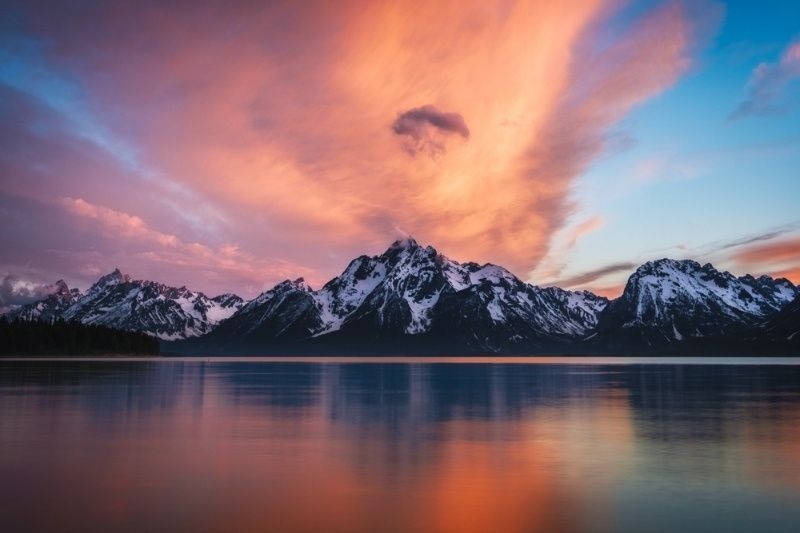
Jenny Lake is one of the easiest and strongest first picks for anyone flying into Jackson Hole Airport. The airport itself is located within Grand Teton National Park, which means travelers arrive unusually close to one of the state’s most photogenic lake areas. Jenny Lake is one of the park’s signature stops, and it works well for casual scenic visits, boating, hiking, and classic Teton views. Hidden Falls, one of the area’s best waterfall add-ons, is reached from the Jenny Lake area as well.
This is one of the top scenic lakes wyoming has for visitors who want beauty without too much guesswork. The lake looks dramatic in almost every kind of light, and it also sets up one of the best lake-and-waterfall combinations in the state.
If someone wants a waterfall that feels worth the effort but still realistic on a first Wyoming trip, Hidden Falls is hard to ignore. The National Park Service says the trail to Hidden Falls offers views of Jenny Lake and Jackson Hole and leads to a 100-foot cascading waterfall. Visitors can either hike around the lakeshore or shorten the route by using the Jenny Lake boat shuttle.
This is one of the most accessible and memorable nature spots wyoming offers around Jackson, especially for travelers who want a classic Grand Teton outing without committing to an all-day backcountry hike. It also works especially well for outdoor photography wyoming visitors who want water, forest, and dramatic mountain framing in one outing.
Taggart Lake is another excellent Grand Teton option for people flying into Jackson and wanting something scenic that feels a little calmer than Jenny Lake. While Jenny Lake gets more attention, Taggart rewards visitors with clear water, mountain views, and a less crowded feel for many travelers. It is one of those places that feels very Wyoming without demanding too much planning.
Among the many scenic lakes wyoming travelers could choose, Taggart stands out for being photogenic, approachable, and easy to pair with other Teton stops in the same day. It is especially good for travelers who like quieter lake settings and simple hiking access.
Flying into Cody gives travelers one of the clearest direct approaches to Yellowstone from the Wyoming side. Yellowstone Regional Airport in Cody describes itself as a year-round aviation gateway to Yellowstone National Park. Once inside the park, the Lower Falls of the Yellowstone River are one of the biggest visual payoffs anywhere in Wyoming. The waterfall drops into the Grand Canyon of the Yellowstone and remains one of the most dramatic natural sights in the entire park. Yellowstone’s official park pages highlight the canyon and falls as some of its major geologic wonders.
This is easily one of the most unforgettable waterfalls near yellowstone and one of the strongest picks for travelers building a trip around major scenery rather than only hikes. It also belongs on any list of best nature destinations USA because the scale of the canyon and falls is hard to overstate.
Lewis Falls is one of the better choices for travelers who want a Yellowstone waterfall that feels easier and less complicated than the canyon viewpoints. It sits in the southern part of Yellowstone, which makes it especially useful for people moving between Jackson and Yellowstone. While the official park page does not break out every smaller waterfall in the same detail, Yellowstone’s official site confirms the park’s enormous scale and abundance of geologic and scenic features, and multiple current waterfall guides continue to list Lewis Falls among the easier Yellowstone waterfall stops.
This is one of the more practical waterfalls near Yellowstone for travelers who want scenic value without an especially demanding stop. It also pairs well with a Jackson-to-Yellowstone route when the goal is to see more than one water feature in a day.
On a Related Note: Grand Prismatic Spring Beauty in Yellowstone, Wyoming
Moose Falls is another strong stop on the southern Yellowstone route and works especially well for travelers coming from Jackson Hole Airport toward Yellowstone. It is widely known as a relatively easy short walk from the road, which gives it real appeal for visitors who want a good waterfall without committing to a longer trail. Current traveler and waterfall listings consistently keep Moose Falls in the conversation for approachable Yellowstone waterfall stops.
This makes it one of the better nature spots Wyoming travelers can add when they want scenic variety and shorter effort. It is also a strong option for casual outdoor photography Wyoming plans because the falls are rewarding without requiring a major hike.
Not every Wyoming lake trip has to revolve around Grand Teton or Yellowstone. Boysen State Park gives central Wyoming travelers a different kind of water scenery, with a broad reservoir framed by canyon country and open space. Wyoming State Parks describes Boysen as a major state park destination in the Wind River Canyon area, and it remains one of the more practical water-focused stops for travelers coming through Riverton or Casper.
For people flying into central Wyoming, this is one of the easiest wyoming lakes and waterfalls alternatives to the national-park-heavy route. It is less about alpine drama and more about open water, boating, canyon scenery, and a quieter central-state feel. That difference gives it real value.
Sinks Canyon State Park, just south of Lander and accessible from Central Wyoming Airport in Riverton, is one of the more unusual water landscapes in the state. Wyoming State Parks explains that the Middle Fork of the Popo Agie River disappears into a limestone cavern at the Sinks and reappears a quarter mile down canyon at the Rise. It is not a classic lake-and-waterfall scene in the Grand Teton sense, but it is a compelling water-based destination with canyon scenery, river features, and strong visual interest.
For travelers who want something different from the headline park stops, this is one of the more distinctive nature spots Wyoming offers. It also has strong potential for outdoor photography wyoming visitors who enjoy water movement, rock textures, and less predictable landscapes.
The smartest airport choice depends on what kind of scenery matters most. Jackson Hole Airport is the best fit for travelers who want immediate access to lakes and iconic mountain-backed water scenery in Grand Teton. Cody works best for Yellowstone waterfalls and bigger geologic drama. Riverton and Casper are stronger for central Wyoming water destinations such as Boysen and Sinks Canyon. Travel Wyoming’s airport guide supports that broader picture by showing how the state’s commercial airports act as regional gateways rather than one-size-fits-all arrival points.
For travelers chasing the most famous water scenery, Jackson and Cody are the obvious leaders. For people who want a quieter road trip feel, central Wyoming can be more rewarding than many first-time visitors expect.
Read Next: Thermopolis Hot Springs For A Relaxing Wyoming Escape
The strongest part of this list is the variety. Jenny Lake and Taggart Lake offer classic alpine beauty. Hidden Falls and the Yellowstone waterfalls bring movement and scale. Boysen brings open reservoir views and central Wyoming character. Sinks Canyon offers something geologically unusual and visually different. Together, they show why wyoming lakes and waterfalls deserve more focused trip planning instead of just being treated as side stops on the way to something else.
That mix is also why these spots belong in a wider conversation about the best nature destinations USA. Wyoming is not only about mountain roads and wildlife. Its water landscapes, especially when paired with smart airport choices, can carry a whole trip on their own.
For a shorter trip, Jackson Hole Airport is usually the strongest choice because it sits inside Grand Teton National Park and gives quick access to Jenny Lake, Taggart Lake, and Hidden Falls. That makes it easier to see both lakes and a major waterfall without spending too much of the trip driving. Cody is an excellent alternative if the main goal is Yellowstone’s waterfalls rather than alpine lake scenery.
Many of them work well for casual travelers too. Jenny Lake has scenic shoreline access and boat options. Hidden Falls is popular because the hike can be shortened with the shuttle boat. Lower Falls in Yellowstone has major viewpoints accessible by road and short walks. Moose Falls is also known for being relatively easy to reach. That means a traveler does not need to plan a heavy hiking trip to enjoy several of these stops.
Late spring through early fall is usually the easiest overall window because roads, park services, and trail access are more reliable. Waterfalls often look especially strong in spring and early summer when runoff is higher, while lakes can be especially photogenic in summer and early fall when weather is more stable. Exact conditions vary by region and elevation, so checking park and airport-area travel guidance before the trip is always a good idea.
This content was created by AI