

Yellowstone National Park, located primarily in Wyoming, is one of the most famous and visited national parks in the United States. As the first national park in the world, it boasts a rich history, breathtaking landscapes, and diverse wildlife. Whether you’re looking for wildlife tours, scenic drives, or hiking trails, Yellowstone offers an unforgettable adventure. In this guide, we will explore the best ways to experience this iconic park and make the most of your visit.
Yellowstone National Park, the most popular park in America, holds a breath-taking expanse of nearly 2.2 million acres, where natural events and geological wonders such as geysers, hot springs, waterfalls, and deep canyons abound because of the massive volcanic hotspot under it, which is well known for its famous geothermal feature. This park is a habitat for various ecosystems, from dense forest to open grassland habitats, thus a better place for wildlife and nature lovers.
The biodiversity housed within this park is mind-blowingly big, from one to hundreds of animal species, from mammals to rare birds. The park, fully part of the Greater Yellowstone Ecosystem, comprises the larger part of nearly intact temperate-zone ecosystems in the geoplanet.
There are several entry points to Yellowstone:
Bozeman in Montana and Jackson in Wyoming are the two nearest airports. Car rentals are probably the best way to move about this park at your own pace. For the less adventurous, shuttles and bus tours are also provided.
Yellowstone National Park generally remains open throughout the year; however, seasons offer distinct experiences:
Old Faithful has become one of the best-recognized landmarks in Yellowstone, erupting almost every ninety minutes. The surrounding Upper Geyser Basin features other extraordinary geysers like Castle Geyser and Grand Geyser. The Old Faithful Visitor Education Center is also an interesting place to visit if you want insight into geothermal activity.
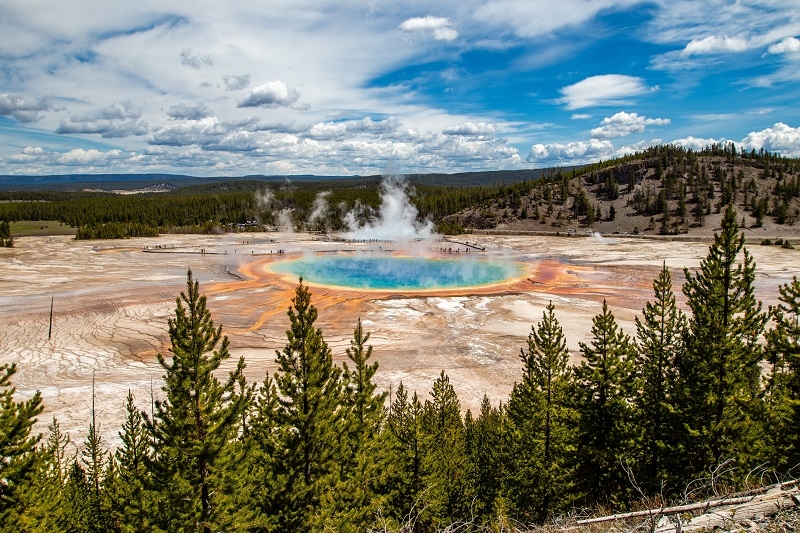
The largest hot spring in the United States, Grand Prismatic Spring is known for its brilliant rainbow colors. A short hike to the Fairy Falls overlook grants the best views. Its bright blues, oranges, and greens make it one of the most photographed spots in the park.
This huge high-altitude lake is fantastic because it provides beautiful views and makes it possible to fish, kayak, or observe wildlife. The breathtaking frozen lake in winter makes a wonderful scene for photography and exploring.
Lamar Valley, often described as "America's Serengeti", provides the best opportunity for wildlife viewing in the park. It probably has the best chance of being viewed with bison, wolves, elk, and grizzly bears. The best times for viewing wildlife are early dawn and early dusk.
One of the most magnificent canyons, it exhibits some spectacular waterfalls, particularly the famous Lower Falls, which has a height of 308 feet and plunges into the Yellowstone River. One of the best vantage points of the canyon and the falls is Artist Point.
The laminated terraces formed by the activity of the hot springs and the deposits collected from the mineralization are unique to this area, with a constant constant changing of heights as they are de-shaped by the deposition of new minerals.
Yellowstone is truly a haven of wild animals and one of the most popular Wyoming national parks to visit for animal lovers. Following are some of the most frequent wildlife tours:
Also Read: Explore Wyoming’s National Parks: Must-Visit Spots for 2025
Yellowstone covers over 900 miles of hiking trails of varying degrees of difficulty. Below are some highlighted trails:
Yellowstone has gone from the deep luxury hotels through really rustic cabins all the way to campgrounds:
Explore More: What Are the Best Cities to Visit in Wyoming? Discover now!
Yellowstone National Park is an unparalleled destination that offers breathtaking landscapes, fascinating geothermal features, and incredible wildlife. Whether you're embarking on wildlife tours, exploring hiking trails, or simply taking in the beauty of Wyoming’s most famous national park, Yellowstone guarantees an unforgettable adventure. Plan your visit wisely, respect nature, and get ready for the trip of a lifetime!
Choosing between regional gateway airports—such as Jackson Hole Airport, Bozeman Yellowstone International Airport, or Yellowstone Airport in West Yellowstone—directly dictates rental vehicle requirements and total driving distance to park entrance gates. Because shuttle services and public transit options within park boundaries are extremely limited, renting a car at your arrival airport remains essential for navigating the expansive Grand Loop Road.
Backcountry overnight camping in Yellowstone requires obtaining a specific wilderness permit through the centralized reservation system or at designated park ranger stations prior to setting out. Furthermore, non-motorized watercraft such as kayaks and canoes must undergo mandatory aquatic invasive species inspections and purchase a park boat permit before launching into Yellowstone Lake or rivers.
From early November through mid-April, the majority of Yellowstone's interior roads close to personal wheeled vehicles to accommodate heavy snow accumulation. Accessing interior landmarks like Old Faithful and the Grand Canyon of the Yellowstone during winter requires booking authorized commercially guided snowcoach or snowmobile tours operating out of gateway entrance towns.
To protect native wildlife and domestic animals from potential hazards, pets are strictly prohibited on all boardwalks, hiking trails, thermal areas, and backcountry zones. Pets are restricted exclusively to paved roads, parking areas, and within 100 feet of established roadside pullouts or developed campgrounds, where they must remain physically restrained on a leash at all times.
With park elevations ranging from 5,300 feet to over 11,000 feet above sea level, thin air and low humidity accelerate dehydration and physical exertion levels for unprepared hikers. Carrying ample drinking water, pacing physical activity, and wearing sun protection are essential precautions against altitude sickness and sudden high-elevation weather shifts.
This content was created by AI